Friday, December 6, 2013

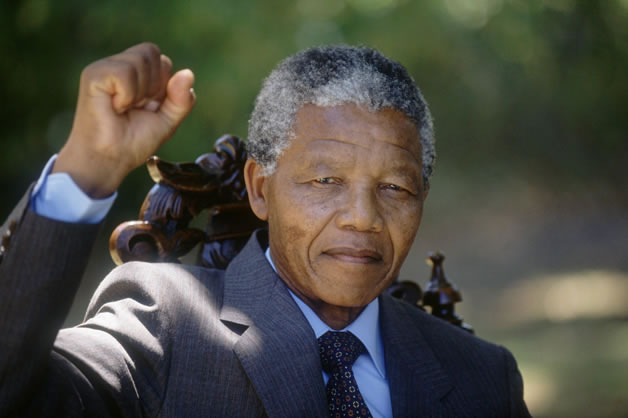
Rodriguez's Music Pays Tribute to Nelson Mandela: Famous Musician's Songwriting and Philosophy Inspired by Nelson Mandela's Freedom Fights and Reconciliation

Answering a question asked by a journalist over the lack of royalties Rodriguez has not received for over 40 years, he replied, "“Hate is too strong an emotion to waste on somebody you don’t like..."

You can purchase a copy of this ebook right here: Sixto Diaz Rodriguez's Philosophy: Rodriguez's eBook Guide to Happiness

Rodriguez writes and sings about some universal themes. Most importantly, he writes about the subjects any Detroiter or any resident of Michigan can relate to. He writes about the people who inhabit his surroundings. Just like Philip Levine's body of works, Rodriguez writes about the working-class Detroit and the motif of the heartland. Rodriguez's songs are timeless and insightful. They are about drugs, love, lust, power, human frailty, greed, the rich and poor, the cry of children, the oppressed and the oppressor. No wonder that his music made him as popular if not more popular than Elvis, Dylan, and the Beatles put together in places such as South Africa and Australia. Rodriguez is the true example of the man who is not recognized by his own people but is made hero in another culture or beyond his own borders. He is a genius. A giant. A superhero anywhere else but his own country.

Thanks to Steven Segerman (sugarman pronounced by some) and the South African fans!

Thanks to Malik Bendjelloul for Searching for Sugar Man!

The PDF copy of this ebook is available below:

Book Review

"Sixto Diaz Rodriguez’s Philosophy: Rodriguez’s eBook Guide to Happiness" is about the man, the legend, and the genius who was not aware of his Rock and Roll fame in other parts of the world. It is about Jesus Rodriguez. Sixto Diaz Rodriguez, the folk musician from Detroit, Michigan who has been given a rebirth thanks to the efforts of two South Africans who launched a search party to find out what happened to their favorite singer and song-writer. Rodriguez, as he prefers to be called now, produced two albums, Cold Fact and Coming From Reality, respectively in 1971 and 1972. They received rave reviews, but they did not sell enough copies. Bootleggers managed to take copies to South Africa and Australia where Rodriguez has had a huge following. He did not know about his popularity on those shores. He was busy demolishing and remodeling homes in the United States to make a living. Music was not paying his bills. The release of this movie/documentary "Searching for Sugar Man" was going to change things. As they say, the rest is just history.

Listening to the poetic tunes and great music of Rodriguez, one cannot help but make the comparison between Dylan, Donovan, Phil Ochs and Lou Reed, Jim Morrison, James Taylor, Nick Drake or Elvis. It may be time for the man to receive his public accolades and due! Rodriguez is the true legend!

For most white South Africans (Afrikaners) and black South Africans, Rodriguez was both a prophet and a messiah thanks to his music. Rodriguez's powerful lyrics of repression and protest caught up among the youth of South Africa which was under the apartheid regime.

Sample his music!

Nelson Mandela: R.I.P, Tata! Icon of Reconciliation and Forgiveness, Apartheid Fighter, a Symbol of Sacrifice, Champion of Freedom and Justice


Book Review


Tables of Content
1. Purest Form of Gold: A Long Journey to Freedom Day
2. What is it like to be Free? Nelson Mandela’s Freedom
3, Awupatha: We Shall Not Be Dominated
4. Robben Island
5. Life Celebration
6. Tribute to all the Comrades:
Mandela Pays Tribute to the Martyrs of the Struggle
7. Rolihlahla, the “Troublemaker” for the Right Cause
8. Robben Island: Thrown into the Heart of Darkness
9. Robben Island: From Darkness to Light
10. Men Made of Gold: My Respect and Tribute
11. God Bless Africa!
12. Apartheid: The Idiocy of It All
13. Bullies’ Indignities: Down with all Bullies
14. Time to Breathe Fresh

Purchase a PDF copy of this ebook now


Purchase a copy of "Nelson Mandela's Poetic Biography: How To Live Before You Die - Experience Leadership Academy, Best Business Quotes and Freedom Struggle" from Barnes and Noble now

Purchase a copy of 'Nelson Mandela's Poetic Biography: How to Live Before You Die - Experience Leadership Academy, Best Business Quotes and Freedom Struggle' from Amazon Kindle now


Purchase a copy of this book "Nelson Mandela's Poetic Biography: How to Live Before You Die, Experience Leadership Academy, Best Business Quotes and Freedom Struggle right here


Nelson Mandela’s Poetic Biography:
Best Quotes, Leadership Academy and Freedom Struggle
Foreword:
As long as I can remember, I have been fascinated by freedom fighters and human rights activists. They are men and women who seek to redress the wrongs of their societies. I am talking about men such as the various African kings who fought hard to turn back the tides of slavery and occupation of their homeland, Abraham Lincoln who fought to keep the Union intact and ultimately emancipate the American slaves, Toussaint Louverture, Jean-Jacques Dessalines, Alexandre Petion, Henri Christophe, Jean Francois Biassou and many others who fought to liberate St. Domingue (Santo Domingo) and create the first black republic in the world, Haiti, Martin Luther King Jr. Rosa Parks, and countless others who fought in the Civil Rights Movement. The list of those who sacrificed their lives, possessions, and families for the freedom of the People, their people and complete strangers, is very long.

Nelson Mandela follows in the footsteps of all those heroes. He knew that South Africa could treat her sons and daughters better. He also knew that there were many other men and women from all ethnic and racial backgrounds who were feeling oppressed by the nationalist agenda. If the majority was not free, the minority was not either. Finding time and devising ways to redress the wrongs and indignities directed to the dark-skinned members of the society would have to take place over time. Little did he then know that the personal cost of his commitment would be very high and arduous!

Nelson Mandela knew that he had to give up everything to launch himself into the Freedom Struggle. He figuratively became a sacrificial lamb for the cause. Many others stopped bullets with their own skin and body only to depart the struggle at a very young and promising age. The non-violent revolution was not fought without bloodshed orchestrated by the apartheid regime. Wrongful accusations and imprisonments were common. And Nelson Mandela and many of his comrades would spend more than 27 years in prison. Many South Africans and sympathizers all over the world were also suffering along with the convicted ANC members. After all, if one was in jail, all were in jail. With hammers, they crushed stones. They were sent to the lime quarry. Their determination to the cause could not be crushed despite the forced labor they endured. Despite the situation, they managed to study and educate themselves at the Robben Island University (the prison).

In this booklet, you will read about the true measures and characters of men and women who survived the most brutal attacks against their persona but who coped and ended up surviving only to finally triumph. The oppressed and the oppressor alike are robbed of their humanity. The warders as well as the prisoners were not free. So many times, the warders had to defer to Nelson Mandela and his group in many areas.


Extracts from Nelson Mandela's Famous Speeches: Great Orator, Public Speaker, Freedom Fighter, and an Angel

FROM HIS ADDRESS to the conference of the Pan-African Freedom Movement of East and Central Africa, Addis Ababa, January 1962.

"South Africa is now a land ruled by the gun. The government is increasing the size of its army, of the navy, of its air force, and the police. Pill-boxes and road blocks are being built up all over the country. Armament factories are being set up in Johannesburg and other cities. Officers of the South African army have visited Algeria and Angola where they were briefed exclusively on methods of suppressing popular struggles. All opportunities for peaceful agitation and struggle have been closed. Africans no longer have the freedom even to stay peacefully in their houses in protest against the oppressive policies of the government. During the strike in May last year the police went from house to house, beating up Africans and driving them to work.

"Hence it is understandable why today many of our people are turning their faces away from the path of peace and non-violence. They feel that peace in our country must be considered already broken when a minority government maintains its authority over the majority by force and violence.

"A crisis is developing in earnest in South Africa. However, no high command ever announces beforehand what its strategy and tactics will be to meet a situation. Certainly, the days of civil disobedience, of strikes, and mass demonstrations are not over and we will resort to them over and over again.

"But a leadership commits a crime against its own people if it hesitates to sharpen its political weapons which have become less effective." ---


FROM HIS ADDRESS to a Pretoria magistrate after his conviction for inciting a strike and leaving the country without a passport, November 1962.

"I do not believe, Your Worship, that this court, in inflicting penalties on me for the crimes for which I am convicted, should be moved by the belief that penalties deter men from the course that they believe is right. History shows that penalties do not deter men when their conscience is aroused, nor will they deter my people or the colleagues with whom I have worked before.

"I am prepared to pay the penalty even though I know how bitter and desperate is the situation of an African in the prisons of this country. I have been in these prisons and I know how gross is the discrimination, even behind the prison walls, against Africans, how much worse is the treatment meted out to African prisoners than that accorded to whites. Nevertheless, these considerations do not sway me from the path that I have taken, nor will they sway others like me. For to men, freedom in their own land is the pinnacle of their ambitions, from which nothing can turn men of conviction aside. More powerful than my fear of the dreadful conditions to which I might be subjected is my hatred for the dreadful conditions to which my people are subjected outside prison throughout this country.

"I hate the practice of race discrimination, and in my hatred I am sustained by the fact that the overwhelming majority of mankind hate it equally. I hate the systematic inculcation of children with colour prejudice and I am sustained in that hatred by the fact that the overwhelming majority of mankind, here and abroad, are with me in that. I hate the racial arrogance which decrees that the good things of life shall be retained as the exclusive right of a minority of the population, and which reduces the majority of the population to a position of subservience and inferiority, and maintains them as voteless chattels to work where they are told and behave as they are told by the ruling minority. I am sustained in that hatred by the fact that the overwhelming majority of mankind both in this country and abroad are with me.

"Nothing that this court can do to me will change in any way that hatred in me, which can only be removed by the removal of the injustice and the inhumanity which I have sought to remove from the political and social life of this country.

"Whatever sentence Your Worship sees fit to impose upon me for the crime for which I have been convicted before this court, may it rest assured that when my sentence has been completed I will still be moved, as men are always moved, by their consciences; I will still be moved by my dislike of the race discrimination against my people when I come out from serving my sentence, to take up again, as best I can, the struggle for the removal of those injustices until they are finally abolished once and for all."


FROM HIS STATEMENT from the dock at the opening of the defence case in the Rivonia trial, Pretoria Supreme Court, April 20 1964.

"Africans want to be paid a living wage. Africans want to perform work which they are capable of doing, and not work which the Government declares them to be capable of. Africans want to be allowed to live where they obtain work, and not be endorsed out of an area because they were not born there. Africans want to be allowed to own land in places where they work, and not to be obliged to live in rented houses which they can never call their own. Africans want to be part of the general population, and not confined to living in their own ghettoes. African men want to have their wives and children to live with them where they work, and not be forced into an unnatural existence in men's hostels. African women want to be with their menfolk and not be left permanently widowed in the Reserves. Africans want to be allowed out after eleven o'clock at night and not to be confined to their rooms like little children. Africans want to be allowed to travel in their own country and to seek work where they want to and not where the Labour Bureau tells them to. Africans want a just share in the whole of South Africa; they want security and a stake in society.

"Above all, we want equal political rights, because without them our disabilities will be permanent. I know this sounds revolutionary to the whites in this country, because the majority of voters will be Africans. This makes the white man fear democracy.

"But this fear cannot be allowed to stand in the way of the only solution which will guarantee racial harmony and freedom for all. It is not true that the enfranchisement of all will result in racial domination. Political division, based on colour, is entirely artificial and, when it disappears, so will the domination of one colour group by another. The ANC has spent half a century fighting against racialism. When it triumphs it will not change that policy.

"This then is what the ANC is fighting. Their struggle is a truly national one. It is a struggle of the African people, inspired by their own suffering and their own experience. It is a struggle for the right to live.

"During my lifetime I have dedicated myself to this struggle of the African people. I have fought against white domination, and I have fought against black domination. I have cherished the ideal of a democratic and free society in which all persons live together in harmony and with equal opportunities. It is an ideal which I hope to live for and to achieve. But if needs be, it is an ideal for which I am prepared to die." ---


FROM HIS SPEECH in acceptance of the Nobel Peace Prize, which he shared with FW de Klerk, Oslo, 1993.

"At the southern tip of the continent of Africa, a rich reward is in the making, an invaluable gift is in the preparation, for those who suffered in the name of all humanity when they sacrificed everything - for liberty, peace, human dignity and human fulfilment.

"This reward will not be measured in money. Nor can it be reckoned in the collective price of the rare metals and precious stones that rest in the bowels of the African soil we tread in the footsteps of our ancestors. It will and must be measured by the happiness and welfare of the children, at once the most vulnerable citizens in any society and the greatest of our treasures.

"The children must, at last, play in the open veld, no longer tortured by the pangs of hunger or ravaged by disease or threatened with the scourge of ignorance, molestation and abuse, and no longer required to engage in deeds whose gravity exceeds the demands of their tender years.

"In front of this distinguished audience, we commit the new South Africa to the relentless pursuit of the purposes defined in the World Declaration on the Survival, Protection and Development of Children.

"The reward of which we have spoken will and must also be measured by the happiness and welfare of the mothers and fathers of these children, who must walk the earth without fear of being robbed, killed for political or material profit, or spat upon because they are beggars.

"They too must be relieved of the heavy burden of despair which they carry in their hearts, born of hunger, homelessness and unemployment.

"The value of that gift to all who have suffered will and must be measured by the happiness and welfare of all the people of our country, who will have torn down the inhuman walls that divide them.

"These great masses will have turned their backs on the grave insult to human dignity which described some as masters and others as servants, and transformed each into a predator whose survival depended on the destruction of the other.

"The value of our shared reward will and must be measured by the joyful peace which will triumph, because the common humanity that bonds both black and white into one human race, will have said to each one of us that we shall all live like the children of paradise.

"Thus shall we live, because we will have created a society which recognises that all people are born equal, with each entitled in equal measure to life, liberty, prosperity, human rights and good governance." ---


FROM HIS ADDRESS on his inauguration as president, Pretoria, May 10 1994.

"The time for the healing of the wounds has come. The moment to bridge the chasms that divide us has come. The time to build is upon us.

"We have, at last, achieved our political emancipation. We pledge ourselves to liberate all our people from the continuing bondage of poverty, deprivation, suffering, gender and other discrimination.

"We succeeded to take our last steps to freedom in conditions of relative peace. We commit ourselves to the construction of a complete, just and lasting peace.

"We have triumphed in the effort to implant hope in the breasts of the millions of our people. We enter into a covenant that we shall build the society in which all South Africans, both black and white, will be able to walk tall, without any fear in their hearts, assured of their inalienable right to human dignity - a rainbow nation at peace with itself and the world.

"As a token of its commitment to the renewal of our country, the new Interim Government of National Unity will, as a matter of urgency, address the issue of amnesty for various categories of our people who are currently serving terms of imprisonment.

"We dedicate this day to all the heroes and heroines in this country and the rest of the world who sacrificed in many ways and surrendered their lives so that we could be free.

"Their dreams have become reality. Freedom is their reward. We are both humbled and elevated by the honour and privilege that you, the people of South Africa, have bestowed on us, as the first President of a united, democratic, non-racial and non-sexist government.

"We understand it still that there is no easy road to freedom. We know it well that none of us acting alone can achieve success. We must therefore act together as a united people, for national reconciliation, for nation building, for the birth of a new world.

"Let there be justice for all. Let there be peace for all. Let there be work, bread, water and salt for all."

A Tribute to Global Statesman Nelson Rolihlahla Mandela or Madiba, Long Walk to Freedom, Autobiography, Poetry, Civil Rights, and Fights for Justice and Reconciliation


Book Review


Tables of Content
1. Purest Form of Gold: A Long Journey to Freedom Day
2. What is it like to be Free? Nelson Mandela’s Freedom
3, Awupatha: We Shall Not Be Dominated
4. Robben Island
5. Life Celebration
6. Tribute to all the Comrades:
Mandela Pays Tribute to the Martyrs of the Struggle
7. Rolihlahla, the “Troublemaker” for the Right Cause
8. Robben Island: Thrown into the Heart of Darkness
9. Robben Island: From Darkness to Light
10. Men Made of Gold: My Respect and Tribute
11. God Bless Africa!
12. Apartheid: The Idiocy of It All
13. Bullies’ Indignities: Down with all Bullies
14. Time to Breathe Fresh

Purchase a PDF copy of this ebook now


Purchase a copy of "Nelson Mandela's Poetic Biography: How To Live Before You Die - Experience Leadership Academy, Best Business Quotes and Freedom Struggle" from Barnes and Noble now

Purchase a copy of 'Nelson Mandela's Poetic Biography: How to Live Before You Die - Experience Leadership Academy, Best Business Quotes and Freedom Struggle' from Amazon Kindle now


Purchase a copy of this book "Nelson Mandela's Poetic Biography: How to Live Before You Die, Experience Leadership Academy, Best Business Quotes and Freedom Struggle right here


Nelson Mandela’s Poetic Biography:
Best Quotes, Leadership Academy and Freedom Struggle
Foreword:
As long as I can remember, I have been fascinated by freedom fighters and human rights activists. They are men and women who seek to redress the wrongs of their societies. I am talking about men such as the various African kings who fought hard to turn back the tides of slavery and occupation of their homeland, Abraham Lincoln who fought to keep the Union intact and ultimately emancipate the American slaves, Toussaint Louverture, Jean-Jacques Dessalines, Alexandre Petion, Henri Christophe, Jean Francois Biassou and many others who fought to liberate St. Domingue (Santo Domingo) and create the first black republic in the world, Haiti, Martin Luther King Jr. Rosa Parks, and countless others who fought in the Civil Rights Movement. The list of those who sacrificed their lives, possessions, and families for the freedom of the People, their people and complete strangers, is very long.

Nelson Mandela follows in the footsteps of all those heroes. He knew that South Africa could treat her sons and daughters better. He also knew that there were many other men and women from all ethnic and racial backgrounds who were feeling oppressed by the nationalist agenda. If the majority was not free, the minority was not either. Finding time and devising ways to redress the wrongs and indignities directed to the dark-skinned members of the society would have to take place over time. Little did he then know that the personal cost of his commitment would be very high and arduous!

Nelson Mandela knew that he had to give up everything to launch himself into the Freedom Struggle. He figuratively became a sacrificial lamb for the cause. Many others stopped bullets with their own skin and body only to depart the struggle at a very young and promising age. The non-violent revolution was not fought without bloodshed orchestrated by the apartheid regime. Wrongful accusations and imprisonments were common. And Nelson Mandela and many of his comrades would spend more than 27 years in prison. Many South Africans and sympathizers all over the world were also suffering along with the convicted ANC members. After all, if one was in jail, all were in jail. With hammers, they crushed stones. They were sent to the lime quarry. Their determination to the cause could not be crushed despite the forced labor they endured. Despite the situation, they managed to study and educate themselves at the Robben Island University (the prison).

In this booklet, you will read about the true measures and characters of men and women who survived the most brutal attacks against their persona but who coped and ended up surviving only to finally triumph. The oppressed and the oppressor alike are robbed of their humanity. The warders as well as the prisoners were not free. So many times, the warders had to defer to Nelson Mandela and his group in many areas.


Tuesday, November 27, 2012

Samples of Poems Extracted from "Nelson Mandela’s Poetic Biography: How to Live Before You Die - Experience Leadership Academy, Best Business Quotes and Freedom Struggle"

Robben Island: Invictus / Unconquered

I am Rolihlahla Mandela
I am Nelson Mandela
I am the First Accused
I am ready to die for my people’s freedom and rights
Though my body may be locked in this cell, by these walls,
My mind roams free all over South Africa
These walls and this prison cannot contain the people’s ideas
Freedom beckons them.
I am Rolihlahla Mandela
I am Nelson Mandela
I told P.W. Botha and F. W. de Klerk that my people yearned to be free
I negotiated with them behind the walls of Robben Island
Even though I had my hands tied behind my back, even though the arduous work load would become unbearable, I did not lose hope
Breaking rocks days in and days out was not a picnic


======================


Book Review


Tables of Content
1, Purest Form of Gold: A Long Journey to Freedom Day
2. What is like to be Free? Nelson Mandela’s Freedom
3, Awupatha: We Shall Not Be Dominated
4. Robben Island
5. Life Celebration
6. Tribute to all the Comrades:
Mandela Pays Tribute to the Martyrs of the Struggle
7. Rolihlahla, the “Troublemaker” for the Right Cause
8. Robben Island: Thrown into the Heart of Darkness
9. Robben Island: From Darkness to Light
10. Men Made of Gold: My Respect and Tribute
11. God Bless Africa!
12. Apartheid: The Idiocy of It All
13. Bullies’ Indignities: Down with all Bullies
14. Time to Breathe Fresh

Purchase a PDF copy of this ebook now


Purchase a copy of "Nelson Mandela's Poetic Biography: How To Live Before You Die - Experience Leadership Academy, Best Business Quotes and Freedom Struggle" from Barnes and Noble now


Purchase a copy of this book "Nelson Mandela's Poetic Biography: How to Live Before You Die, Experience Leadership Academy, Best Business Quotes and Freedom Struggle right here


Bullies’ Indignities: Down with all Bullies

Think again if you thought bullies had a tough skin. They are paper mache
Like cheetahs that stalk their prey, soon they give up the chase
And when confronted by alpha lions or even hyenas, they leave their kill or target
Like hyenas and vultures, bullies are opportunistic scavengers
Bullies do not have the stomach to fight a protracted fight because they know they are wrong. Sooner or later, they will crack under the pressure and spotlight
Bullies have a brittle but fragile exterior. They lack the moral standards
They are show horses. Clydesdale horses they are not!
Bullies are boys or girls in transition. They are spoiled brats who need discipline and guidance
Put them in front of natural hardships. They’ll crumble like sheets of paper
The natural men live in harmony with their surroundings. They share, support, mentor, and nurture the young minds
True men have natural obligations and bring honor to their birthplace
They build stuff with their hands and mind. They hunt, build a fire, roast a pig or a goat, eat the ears of corns from their garden
True men sit around under the stars to tell tales, boast about their conquests and prowess. Long live the natural men and women among us!

Saturday, November 24, 2012

Two New Books of Poetry for your Kindle: "California Blooms, Blossoms, and Harvest Delights" and "The Long Lost Garden of Eden"

The re-release of two new books of poetry for your Kindle:

Description:

"California Blooms, Blossoms, and Harvest Delights: Golden Vignettes From Big Sur, Pacific Coast Highway, California Scenic Highway 1 to Yosemite and Highway 99" is a book of poetry that focuses on the diversity of the people, the beauty of the land, bounty of agricultural products, entertainment industry, Pacific Coast beaches, and natural infrastructures and resources such as Big Sur, Yosemite, Grand Canyon, Scenic Highway 1, San Francisco Bridge etc. These poems compel you to meditate on all the common things that tend to show our interdependence and sameness. Poems such as 'Abrahamic Promise,' 'Bridges of California,' 'Autumn's Bare Limbs,' 'Cry Over Manzanar,' 'Pastoral Delights,' 'Freeway and Highway Crosses,' 'Harvesting Delights and Fall Transition,' 'Open Range...,' 'Roosting Marvels, Roosting Headache,' 'Tamales for the Holidays' are among those that will strike a personal chord with most of you.

California Blooms, Blossoms, and Harvest Delights: Golden Vignettes From Big Sur, Pacific Coast Highway, California Scenic Highway 1 to Yosemite and Highway 99

Purchase a PDF Copy of the whole book right here:

You can also purchase this ebook at Amazon.com. Download it to your kindle or your computer!

This book is an eclectic collection of poems and short essays on California's people and landscape, wine, beach and car culture. Wordsworth summarizes my poetic affinity, "Poetry is the spontaneous overflow of powerful feelings; it takes its origin from emotion recollected in tranquility." California Blooms, Blossoms, and Harvest Delights deals with this expansive, rich and fertile landscape in a way that readers will quickly recognize the important landmarks, features and attributes of the Golden state. It pinpoints areas of appreciation and highlights important cultural contributions and activities of the various ethnic and minority groups forming this new frontier, Central California. "Our hills and farmland are blooming with new houses and commercial buildings bordering fields of grazing cows." This is an uplifting and thought-provoking work.

Buy This Book Here:

Purchase a copy of the new edition of "California Blooms, Blossoms, and Harvest Delights" from Amazon Kindle now


Description:

The Long Lost Garden of Eden is a tribute to the fruit growers of the Central Valley of California and all other agriculture-derived industries. Mr. Charles remains true to his upbringing deeply rooted in agribusiness. This book is the result of his keen observations and 12-year research into what makes the San Joaquin Valley one of the most fertile lands in the country. His poems will give you a glimpse of the Central Valley's diversity. His research has culminated into the realization that the Central Valley of California, locked between Southern and Northern California, is the fruit basket of the world. This collection will engage your mind and soul. It will provoke deep reflection that will lead to enlightenment, positive attitude and spiritual renewal. The themes of these poems are universal. Artistic appreciation, hope, beauty, love, loss, hard work, self-improvement, despair, migration, and drought are all themes anybody can relate to, irrelevant of their origins and taste.

Buy this book now: Buy a copy of the new edition of "The Long Lost Garden of Eden" from Kindle now.

Buy this new, updated edition of the book now: Buy a copy of the new edition of "The Long Lost Garden of Eden" from Kindle now.


The Long Lost Garden of Eden:

Email Delivery of PDF copy of "The Long Lost Garden of Eden."


Wednesday, October 17, 2012

A Great eBook about Sixto Rodriguez's Comeback: The Sugar Man's Philosophy, Music, and Delayed Rise to Rock and Roll Fame and Glory

Answering a question asked by a journalist over the lack of royalties Rodriguez has not received for over 40 years, he replied, "“Hate is too strong an emotion to waste on somebody you don’t like..."

You can purchase a copy of this ebook right here: Sixto Diaz Rodriguez's Philosophy: Rodriguez's eBook Guide to Happiness

Rodriguez writes and sings about some universal themes. Most importantly, he writes about the subjects any Detroiter or any resident of Michigan can relate to. He writes about the people who inhabit his surroundings. Just like Philip Levine's body of works, Rodriguez writes about the working-class Detroit and the motif of the heartland. Rodriguez's songs are timeless and insightful. They are about drugs, love, lust, power, human frailty, greed, the rich and poor, the cry of children, the oppressed and the oppressor. No wonder that his music made him as popular if not more popular than Elvis, Dylan, and the Beatles put together in places such as South Africa and Australia. Rodriguez is the true example of the man who is not recognized by his own people but is made hero in another culture or beyond his own borders. He is a genius. A giant. A superhero anywhere else but his own country.

Thanks to Steven Segerman (sugarman pronounced by some) and the South African fans!

Thanks to Malik Bendjelloul for Searching for Sugar Man!

The PDF copy of this ebook is available below:

Book Review

"Sixto Diaz Rodriguez’s Philosophy: Rodriguez’s eBook Guide to Happiness" is about the man, the legend, and the genius who was not aware of his Rock and Roll fame in other parts of the world. It is about Jesus Rodriguez. Sixto Diaz Rodriguez, the folk musician from Detroit, Michigan who has been given a rebirth thanks to the efforts of two South Africans who launched a search party to find out what happened to their favorite singer and song-writer. Rodriguez, as he prefers to be called now, produced two albums, Cold Fact and Coming From Reality, respectively in 1971 and 1972. They received rave reviews, but they did not sell enough copies. Bootleggers managed to take copies to South Africa and Australia where Rodriguez has had a huge following. He did not know about his popularity on those shores. He was busy demolishing and remodeling homes in the United States to make a living. Music was not paying his bills. The release of this movie/documentary "Searching for Sugar Man" was going to change things. As they say, the rest is just history.

Listening to the poetic tunes and great music of Rodriguez, one cannot help but make the comparison between Dylan, Donovan, Phil Ochs and Lou Reed, Jim Morrison, James Taylor, Nick Drake or Elvis. It may be time for the man to receive his public accolades and due! Rodriguez is the true legend!

For most white South Africans (Afrikaners) and black South Africans, Rodriguez was both a prophet and a messiah thanks to his music. Rodriguez's powerful lyrics of repression and protest caught up among the youth of South Africa which was under the apartheid regime.

Sample his music!

Wednesday, July 18, 2012

Happy Birthday to Madiba!

Happy birthday to Nelson Mandela known as Madiba, his clan name! South Africa and the rest of the world salute this aging hero for all the great things he represents. He gave us 67 years of political engagement. All over South Africa, people are doing community service to celebrate his birthday. The aging former leader of South Africa decided to have a quiet celebration. Many dignitaries including President Clinton and his daughter, Chelsea, visited him in his birth village, Qunu. He planted an avocado pear tree there.

Sunday, April 8, 2012

A Witness to History: 2011 Poet Laureate and University of Kentucky Professor Nikky Finney Talks about Indian Pencils and Blackboards


"Head Off and Split" is the book that won Nikky Finney the most prestigious prize. It is also the book that shows her great artistic skills. The poet laureate uses ordinary objects to bring out the subliminal and eternal. Jericho Brown captures the essence of her book of poetry this way, ""Again, Nikky Finney manipulates into music the words readers use to see, hear, and understand a soul's history. Head Off & Split is as Southern as it is American, as feminist as it is human, as black as it is a tide of colors knowing no bounds..."

Here is what others are saying about her and her new book. Kwame Dawes wrote, "With Head Off & Split, Nikky Finney establishes herself as one of the most eloquent, urgent, fearless and necessary poets writing in America today. What makes this book as important as anything published in the last decade is the irresistible music, the formal dexterity and the imaginative leaps she makes with metaphor and language in these simply stunning poems. This is a very, very important achievement."

Readers will be attracted by the beauty of language and the mastery with which the author treats each one of her subjects. Meena Alexander summs it up this way, "In Nikky Finney's Head Off & Split the beauty of language soars and saves us even as we skirt the raw edge of terror. And something rare and precious is restored, a light, circling movement of the spirit. This is poetry to give thanks for."

At the opening of Nikky Finney's National Book Award Acceptance speech, she says, "We beging with history..." In a historic and literal way, the poet laureate was right in acknowledging history, the most recent and past history, the history of those who had fought in the past, those whose body was abused and mistreated for the gains of men who thought they could own other men. Indeed, "We begin with history..." brings back the sacrifices of men and women like the author's parents who had to decide to invest in education, in the literary things that were forbidden to black slaves and could have them killed. "We begin with history..." was and is for ever present when her father, retired chief justice Earnest A Finney had to decide difficult cases in an era when Jim Crow and discrimination were running rampant in the country. The retired Chief Justice knew that he had to bring his contribution to pillar of civil rights movement, a potent sign of history.

History is ongoing.
Nikky likes history and anything about history..."I am incredibly drawn to history; personal history, American history, Southern history, family history,
the history of a community, the history of secrets, the history that has gone missing, the history that has
been told by the lion hunter but not the lion, the history of pencils, of loss, of tenderness, the history of
what the future just might be if we would only..."

It is that sense of history that led Nikky to pen a poem about Strom Thurmond titled "Dancing with Strom..." She prefaced the poem with this quote from Thurmond, Thurmond's quote was spoken in 1948: “I want to
tell you, ladies and gentleman, there’s not enough troops in the army to force the Southern people to break
down segregation and accept the Negro into our theatres, into our swimming pools, into our homes, and
into our churches.”

"Black people were the only people in the United States who were ever officially forbidden to be literate..." said Nikky Finney in her acceptance speech...." said Nikky Finney in her speech. "

"I am now officially speechless," concluded Nikky.


Where can you find Nikky's books: www.nikkyfinney.net and on Amazon.com


Saturday, February 25, 2012

President Zuma Said Madiba (Nelson Mandela) is Fine After Checkups for Abdominal Ailment

Everyone is praying for Madiba's prompt recovery from abdominal ailments. Earlier today, he was taken to Pretoria's "1 Military" hospital for investigation of the abdominal woes of which he had been complaining. The former South African President, an icon of the Struggle, has not been seen in the speaking circuit after his recent hospitalization. He has been staying at home mostly these days.


Well wishers from all over the world want to know how he is doing. They are praying for his good health. They want him to be painless.


Purchase a PDF copy of this ebook now


Purchase a copy of "Nelson Mandela's Poetic Biography: How To Live Before You Die - Experience Leadership Academy, Best Business Quotes and Freedom Struggle" from Barnes and Noble now

Purchase a copy of 'Nelson Mandela's Poetic Biography: How to Live Before You Die - Experience Leadership Academy, Best Business Quotes and Freedom Struggle' from Amazon Kindle now

Friday, February 3, 2012

Top Black Women in American History and Culture: From Harriet Tubman, Oprah Winfrey to Rosa Parks and Michelle Obama...

Black Women in American History and Culture

MARY MCLEOD BETHUNE - Educator and activist mobilized thousands of black women as leader and founder of the National Association of Colored Women and National Council of Negro Women. She helped establish Bethune-Cookman College.
DR. MAE JEMISON – NASA astronaut and the first black woman to travel in space when she went into orbit aboard the Space Shuttle Endeavour on September 12, 1992.
ROSA PARKS – African American Civil Rights activist called the mother of the modern day civil rights movement.
SHIRLEY CHISHOLM – In 1968 she became the first black woman to be elected to the United States Congress representing New York’s 12th Congressional District for seven terms from 1969 to 1983.
HARRIET TUBMAN - Escaped slavery to become a leading abolitionist. She led hun-dreds of enslaved people to freedom along the route of the Underground Railroad, and was known as the Moses of her people.
WILMA RUDOLPH – The first American woman to win three gold medals in track and field at the 1960 Olympic games. Named Associated Press Woman Athlete of the year twice.
ALTHEA GIBSON – Tennis champion and the first African-American invited to play at Wimbledon and the first to win a Grand Slam title in 1957 and again in 1958.
OPRAH WINFREY – Businesswoman, talk show host, actress, producer, and philanthro-pist, hailed by Life Magazine as the most influential woman of her generation. In 2005 Business Week named her the greatest black philanthropist in American history.
ELLA FITZGERALD - "The First Lady of Song," Ella Fitzgerald was arguably the finest female jazz singer of all time having sold over 40 million albums and winning 13 Grammy awards.
MAYA ANGELOU – Civil rights activist, poet, teacher and prize winning autobiograph-ical novelist. One of only two poets asked to read at a Presidential inauguration
Myrlie Evers-Williams, widow of Medgar Evers, Civil Rights Leader and Icon, shot almost 5 decades ago in Mississippi. She wants us not to forget Medgar Evers who paved the way for Martin Luther King and others to fight for equal rights
Michelle Obama, Wife of President Barack Obama, The First African-American First Lady

Tuesday, January 17, 2012

Inspired by Rosa Parks's Courage and Sitting on the Bus: How to Find Inspiration For Our Hard Times


Purchase this book for far less, $9.99 at Amazon /Kindle Direct Publishing

Inspired by Rosa Parks's Courage and Sitting on the Bus (v.4) is an inspirational book of poetry that compels us to look back and forward to find signs of inspiration in our lives and current difficult times. This book of poetry has 100 new and selected poems published solely for your edification and uplifting. Find more at http://poetrybusinessblog.blogspot.com


Support independent publishing: Buy this book on Lulu.

Support independent publishing: Buy this book on Lulu.

Rosa Parks's Courage and Sitting on the Bus is an inspirational book of poetry that compels us to look back and forward to find signs of inspiration in our lives and current difficult times. This book of poetry has new and selected poems published solely for your edification and uplifting. Find more at http://poetrybusinessblog.blogspot.com

Support independent publishing: Buy this e-book on Lulu.

Support independent publishing: Buy this e-book on Lulu.


Thursday, December 15, 2011

Nelson Rolihlahla Dalibhunga Mandela aka 'Madiba or Tata: Nelson Mandela's Poetry, Poems, Quotes, and Prose

Book Review


Tables of Content
1, Purest Form of Gold: A Long Journey to Freedom Day
2. What is like to be Free? Nelson Mandela’s Freedom
3, Awupatha: We Shall Not Be Dominated
4. Robben Island
5. Life Celebration
6. Tribute to all the Comrades:
Mandela Pays Tribute to the Martyrs of the Struggle
7. Rolihlahla, the “Troublemaker” for the Right Cause
8. Robben Island: Thrown into the Heart of Darkness
9. Robben Island: From Darkness to Light
10. Men Made of Gold: My Respect and Tribute
11. God Bless Africa!
12. Apartheid: The Idiocy of It All
13. Bullies’ Indignities: Down with all Bullies
14. Time to Breathe Fresh

Purchase a PDF copy of this ebook now


Purchase a copy of "Nelson Mandela's Poetic Biography: How To Live Before You Die - Experience Leadership Academy, Best Business Quotes and Freedom Struggle" from Barnes and Noble now

Purchase a copy of 'Nelson Mandela's Poetic Biography: How to Live Before You Die - Experience Leadership Academy, Best Business Quotes and Freedom Struggle' from Amazon Kindle now

Purchase a copy of this book "Nelson Mandela's Poetic Biography: How to Live Before You Die, Experience Leadership Academy, Best Business Quotes and Freedom Struggle right here


Nelson Mandela’s Poetic Biography:
Best Quotes, Leadership Academy and Freedom Struggle

Extracts and Passages of the Oprah Winfrey's Eulogy for Rosa Parks

Oprah Winfrey's Eulogy For Rosa Parks

Oprah Winfrey's Eulogy for Rosa Parks

Reverend Braxton, family, friends, admirers, and this amazing choir:

I -- I feel it an honor to be here to come and say a final goodbye. I grew up in the South, and Rosa Parks was a hero to me long before I recognized and understood the power and impact that her life embodied. I remember my father telling me about this colored woman who had refused to give up her seat. And in my child's mind, I thought, "She must be really big." I thought she must be at least a hundred feet tall. I imagined her being stalwart and strong and carrying a shield to hold back the white folks. And then I grew up and had the esteemed honor of meeting her. And wasn't that a surprise. Here was this petite, almost delicate lady who was the personification of grace and goodness. And I thanked her then. I said, "Thank you," for myself and for every colored girl, every colored boy, who didn't have heroes who were celebrated. I thanked her then.

And after our first meeting I realized that God uses good people to do great things. And I'm here today to say a final thank you, Sister Rosa, for being a great woman who used your life to serve, to serve us all. That day that you refused to give up your seat on the bus, you, Sister Rosa, changed the trajectory of my life and the lives of so many other people in the world. I would not be standing here today nor standing where I stand every day had she not chosen to sit down. I know that. I know that. I know that. I know that, and I honor that. Had she not chosen to say we shall not -- we shall not be moved.

So I thank you again, Sister Rosa, for not only confronting the one white man who[se] seat you took, not only confronting the bus driver, not only for confronting the law, but for confronting history, a history that for 400 years said that you were not even worthy of a glance, certainly no consideration. I thank you for not moving.

And in that moment when you resolved to stay in that seat, you reclaimed your humanity and you gave us all back a piece of our own. I thank you for that. I thank you for acting without concern. I often thought about what that took, knowing the climate of the times and what could have happened to you, what it took to stay seated. You acted without concern for yourself and made life better for us all. We shall not be moved. I marvel at your will. I celebrate your strength to this day. And I am forever grateful, Sister Rosa, for your courage, your conviction. I owe you to succeed. I will not be moved.

Oprah Winfrey's Eulogy For Rosa Parks